Balaenidae
Southern Right Whale
E. australis
Least ConcernRight Whales
Right whales and the bowhead — stout, slow, dorsal-fin-less skim feeders carrying the longest baleen of any animal.
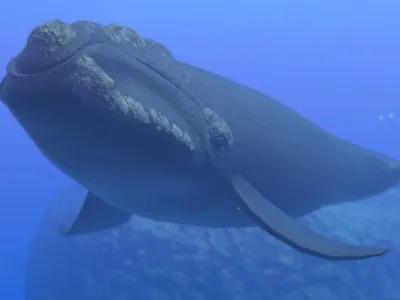
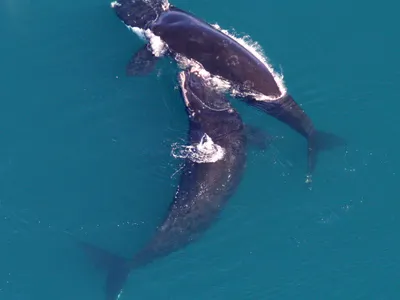
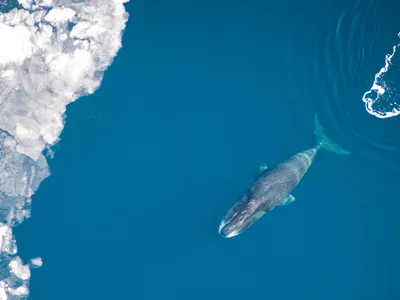
Balaenids are built for continuous filtration rather than for speed. The rostrum is strongly arched to house baleen plates far longer than any rorqual carries — up to four metres in the bowhead — and the animal simply swims forward with its mouth open, straining copepods and krill from the water as it goes. There are no throat pleats, no dorsal fin, and the body is thick with blubber.
That combination is the origin of the English name. Right whales were the right ones to hunt: slow enough to be caught from an open boat, coastal enough to be reached from one, rich enough in oil and whalebone to be worth the trip, and — because of the blubber — buoyant enough to float after being killed rather than sinking.
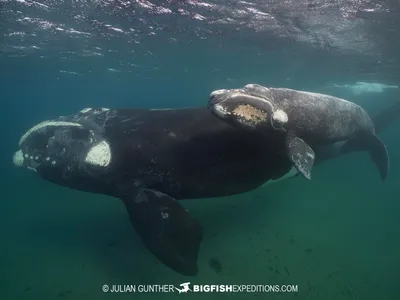
The three Eubalaena species carry callosities, roughened patches of thickened skin on the head colonised by pale whale lice. The pattern is unique to an individual and stable for life, which has made photographic identification of entire populations possible and is why the North Atlantic right whale is one of the few large animals whose living members are known essentially one by one.