Balaenopteridae
Common Minke Whale
B. acutorostrata
Least ConcernRorquals
The rorquals — streamlined, fast lunge-feeders whose pleated throats let them swallow a volume of water larger than themselves.
The family name comes through Latin from the Norwegian røyrkval, "furrow whale", for the ventral pleats that run from chin to navel. In a lunge those pleats unfold, the lower jaw drops to nearly ninety degrees, and the whale takes in a mass of prey-laden water that can exceed its own body mass; the throat then contracts and drives the water out through the baleen. A sensory organ at the tip of the chin, unique to rorquals and only described in 2012, appears to coordinate the whole manoeuvre.
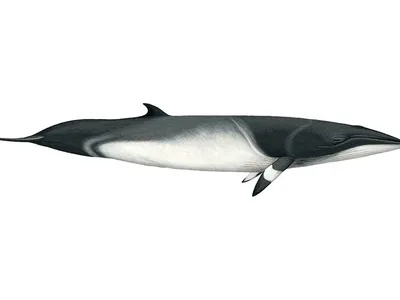
Everything else about the body follows from that: a long, streamlined shape built for the acceleration a lunge needs, a small falcate dorsal fin set far back, and comparatively short baleen. The humpback, placed in its own genus, diverges most — enormously long flippers, a stockier build, cooperative bubble-net feeding and song.
Rorquals were largely out of reach of open-boat whaling: too fast to chase under sail, and dense enough to sink when killed. The steam catcher, the explosive harpoon and the factory ship removed all three protections within a few decades, and the twentieth-century industry worked through the family from largest to smallest. The consequences are still legible in the conservation status of the individual species.
B. acutorostrata
Least Concern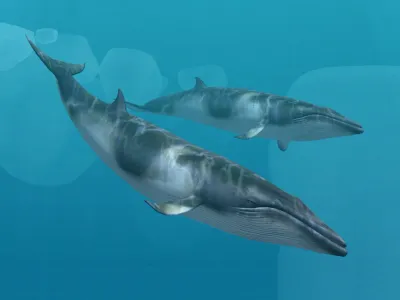
B. bonaerensis
Near Threatened
B. borealis
Endangered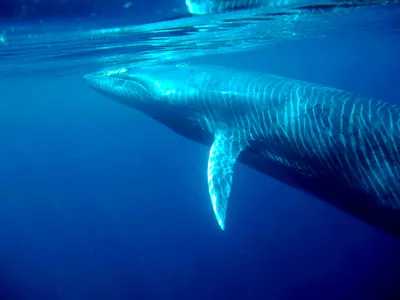
B. edeni
Data Deficient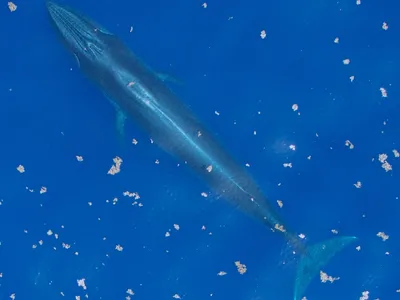
B. ricei
Critically Endangered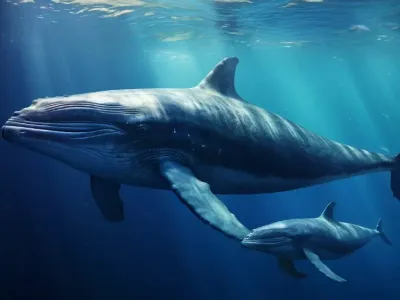
B. musculus
Endangered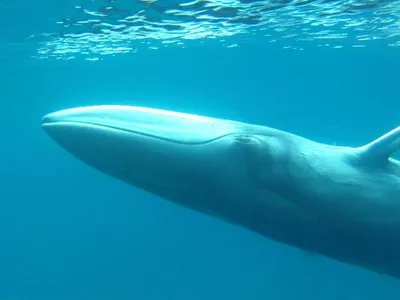
B. omurai
Data Deficient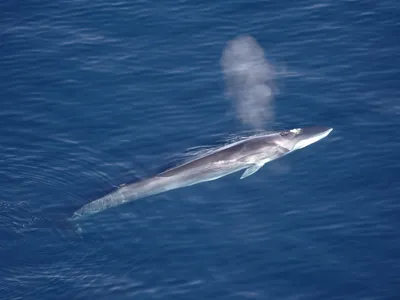
B. physalus
Vulnerable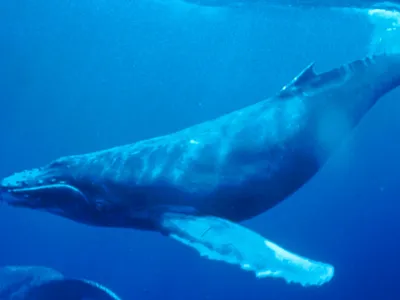
M. novaeangliae
Least Concern