Monodontidae
Beluga Whale
D. leucas
Least ConcernArctic Whales
The beluga and the narwhal — two ice-associated Arctic whales that traded a dorsal fin for the ability to swim beneath sea ice.
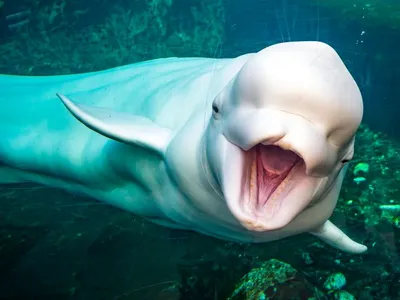
Monodontids are confined to Arctic and subarctic waters, and both species have replaced the dorsal fin with a low ridge or nothing at all — a fin is a liability for an animal that surfaces in cracks in the pack ice. Unusually for cetaceans their cervical vertebrae are unfused, so they can turn their heads, and both have an exceptionally mobile melon.
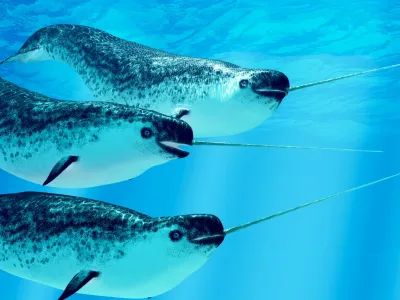
The beluga is born slate gray and whitens over five to eight years. It is the most vocal of the large whales — whistles, clicks, chirps and creaks earned it the name sea canary from nineteenth-century whalers — and it moults, gathering in river estuaries in summer to rub its old skin off on gravel. The narwhal has no functional teeth at all except, in almost all males and about one female in seven, the left upper canine, which erupts through the lip and grows into a spiralled tusk up to three metres long. The tusk is porous, with dentinal tubules running to nerve endings, and appears to work partly as a sensory organ.
Both species time their movements to the ice. That makes them among the cetaceans most directly exposed to a warming Arctic, and to the shipping, noise and industrial activity that follow the retreating ice edge. Both remain central to Inuit subsistence hunting across their range.