
Physeteridae
Sperm Whale
P. macrocephalus
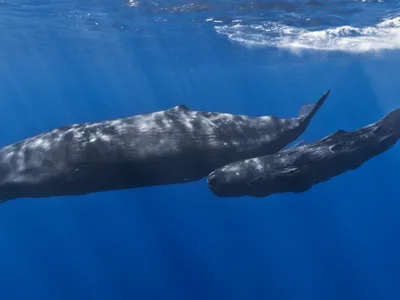
VulnerableThe sperm whale: largest toothed animal on Earth, deepest-diving of the great whales, and the whale of the open-boat whaling era.
Physeter is monotypic. Its scientific name was contested for two centuries — Linnaeus named four sperm whale species in 1758, and catodon and macrocephalus were both used for the survivor — before prevailing usage settled the matter in favour of Physeter macrocephalus.
The head is the animal. The spermaceti organ and the junk together form a sound projector occupying up to a third of the body, filled with a wax that liquefies and solidifies across a narrow temperature range; the same wax is what made the species commercially valuable, burning cleaner than any other whale oil and lubricating precision machinery into the twentieth century. Ambergris, a secretion formed around indigestible squid beaks, was worth more still.
The social structure is matrilineal and long-lived. Females and immature animals form units of around ten that remain together for decades, sharing calf care and foraging in tropical and warm temperate water; males leave in their teens for high latitudes and return only to mate. Units associate into clans defined by their coda repertoires — patterned sequences of clicks that function as dialect, are learned rather than inherited, and keep clans sharing the same water socially separate.